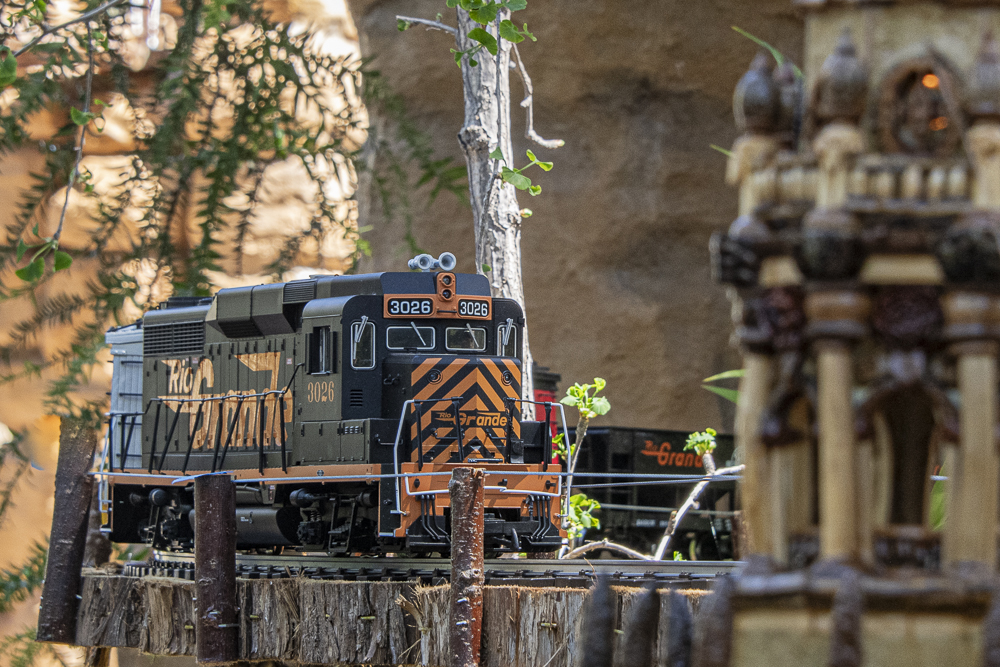
The Great Garden Express

The Buildings

The Great Garden Express features Missions from the Southwest and railway stations, depots, and towers from across the country. The buildings are nestled in high-elevation desert plantings and geologically inspired structures that mimic the picturesque, rocky landscape of the Southwest and Arizona.

Train Schedule

October 1 –
May 30
June 1 –
September 30
Tuesday – SundayTuesday – Sunday
9:00am – 2:00pm8:00am – 1:00pm
Train schedule subject to change due to weather and safety concerns

Learn About the Buildings

All the buildings you see were created using natural materials like sticks, leaves, seeds, nuts, and more!
Cannondale Station

Wilton, Connecticut

The Danbury and Norwalk Railroad opened the line in late February 1852, with the official opening on March 1. Charles Cannon of Cannondale was the subcontractor who built the route through Wilton. The station made travel suddenly much quicker than stagecoach transportation.


The station is currently a contributing property of the Cannondale Historic District.

Chattanooga Union Station

Chattanooga, Tennessee

Chattanooga Union Station, more commonly known as the Union Depot in Chattanooga, constructed between 1857-1859, served as a train car shed in Chattanooga, TN. Located at Broad and Ninth Streets (the latter now Martin Luther King Blvd), the station was one of two major railroad terminals in the city, the other being the Southern Railway’s Terminal Station.


Modifications were added in 1868 and 1881 to include offices and waiting rooms. The train car shed was in use during and after the Civil War. After failed efforts to preserve the structure, the Union Depot was torn down in 1972.

(Original) Santa Fe Depot

San Diego, California

A real estate boom in the spring of 1887 brought thousands of people to Southern California, many of them traveling on “The Santa Fé Route” to San Diego. The California Southern constructed a new Victorian-style depot to handle the throngs of people coming to the Southland.


Though the elegant California Southern depot had served San Diego for nearly three decades, the station was not adequate to handle the expected flood of visitors through the “Silver Gate” in 1915.

Union Passenger Station

Tacoma, Washington

The Union Passenger Station in Tacoma, Washington, United States, opened in 1911. It was listed on the National Register of Historic Places in 1974. It currently serves as a courthouse of the United States District Court for the Western District of Washington.

The distinctive architecture, dominated by a copper dome, is a landmark for the area.

The Viaduct Hotel & Station

Relay, Maryland

The Baltimore and Ohio Railroad was one of the oldest railroads in the United States. Construction began on July 4, 1828, with the original route following the upper branch of the Patapsco River. In 1835, the Washington Branch was constructed, including the Thomas Viaduct.

This new line branched at Relay, the site of a former postroad hotel and changing point for stage horses. The 1830s Relay House served as a hotel until it was replaced by the Viaduct Hotel in 1872. The Gothic combination railroad station and hotel operated until 1938 and was torn down in 1950.

The Central Railroad of New Jersey Terminal

Jersey City, NJ

The Central Railroad of New Jersey Terminal, also known as Communipaw Terminal and Jersey City Terminal, was the Central Railroad of New Jersey’s waterfront passenger terminal in Jersey City, New Jersey. It was also serviced by CNJ-operated Reading Railroad trains, the Baltimore and Ohio Railroad, and the Lehigh Valley Railroad during various periods in its 78 years of operation.


The terminal was built in 1889, replacing an earlier one that had been in use since 1864. The terminal was one of five passenger railroad terminals that lined the Hudson Waterfront during the 19th and 20th centuries, the others
being Weehawken, Hoboken, Pavonia and Exchange Place, with Hoboken being the only station that is still in use. It operated until April 30, 1967.

Santa Fe Depot

Shawnee, Oklahoma

The Santa Fe Depot was built in 1903-1904 and was operational as a train depot until 1973. It currently houses the Pottawatomie County Historical Society Museum and an abundance of artifacts and information about the history of Pottawatomie County.

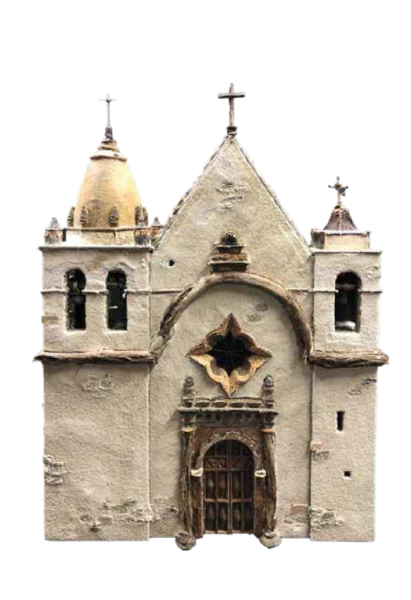
San Carlos Borromeo de Carmelo
Carmel, CA

Carmel, CA

Founded by Father Junipero Serra in 1770 and named after Saint Charles Borromeo, a 16th-century archbishop of Milan. The stone church was completed in 1797 and restored after years of neglect in 1884.
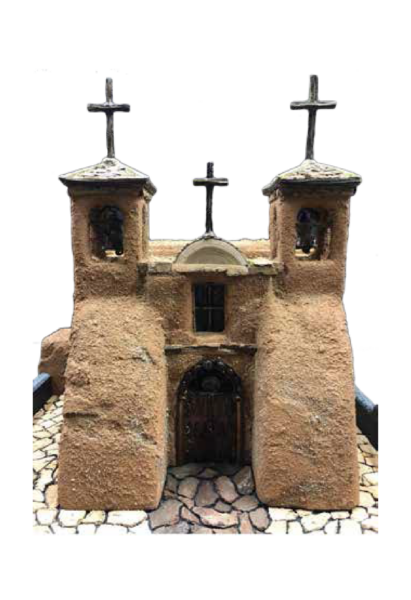
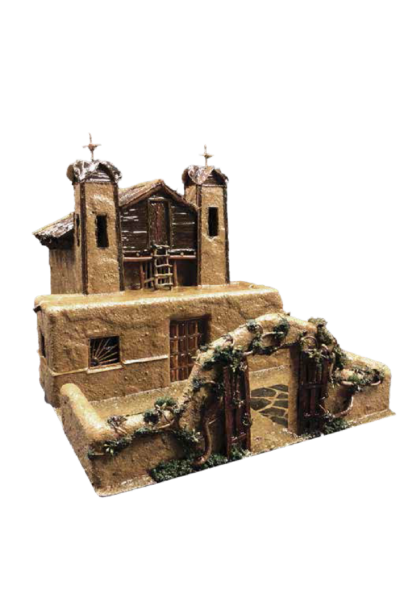
San Francisco De Asis Church

Taos, NM

San Francisco de Asis is a National Historic Landmark. The adobe church was completed in the early 1800s.
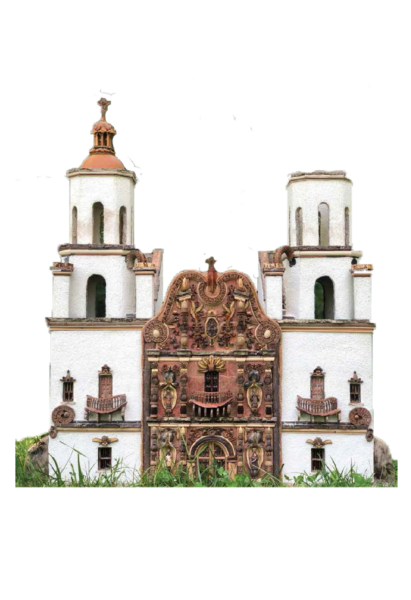
Mission San Xavier Del Bac

Tucson, AZ

San Xavier was founded as a Catholic mission by Father Eusebio Kino in 1692. Construction of the current church began in 1783 and was completed in 1797. It is the oldest intact European structure in Arizona, the interior is filled with original statuary and murals.
East Glacier Park Train Station

East Glacier Park Village, Montana

East Glacier Park Station is a train station in East Glacier Park Village, Montana. It is a seasonal stop for Amtrak’s Empire Builder line, open from April to October. It serves mostly visitors to Glacier National Park. It functions as an alternate to Browning Station on the Blackfeet Indian Reservation, which opens from October to April.


The historic Glacier Park Hotel (aka Glacier Park Lodge) was built in 1913 by the Great Northern Railroad. The hotel is within a block’s distance from the station, and thus arriving passengers can walk to the Glacier Park Hotel.

Ellicott City Station

Ellicott City, Maryland

The Baltimore and Ohio Ellicott City Station Museum in Ellicott City, Maryland, is the oldest remaining passenger railway station in the United States, and one of the oldest in the world. It was built in 1830 as the terminus of the Baltimore and Ohio Railroad line from Baltimore to the town then called Ellicott’s Mills, and a facility to service steam locomotives at the end of the 13-mile (21 km) run.

The station, a National Historic Landmark, is now used as a museum.

Grain Elevator

Missouri

Grain elevators were invented by Joseph Dart and Robert Dunbar in 1842 in Buffalo, New York. They created the grain elevators to help with the problem of unloading and
storing grain that was being transported through the Erie Canal.
The invention of grain elevators greatly helped grain farmers be able to produce and move more grain in less time. And during the building boom of the railroad system, grain elevators adapted and were built along the railroad tracks.

Kirkwood station

Kirkwood, MO

In 1851, land where the current station is located (Argonne Avenue and Kirkwood Road) was obtained from Owen Collins by the Pacific Railroad for a right of way. The track for the Pacific Railroad to Kirkwood was completed in 1853. The town was named for the chief engineer for the railroad, James P. Kirkwood.

In 1893, Douglas Donovan was hired by the Missouri Pacific Railroad to
construct the current stone station to replace the wooden station. The
current station remains today as an outstanding example of Richardsonian Romanesque architecture.

Los Angeles Union Station

Los Angeles, CA

Los Angeles Union Station is the main train station in Los Angeles, California, and the largest passenger rail terminal in the Western United States. It opened in May 1939 as the Los Angeles Union Passenger Terminal, replacing La Grande Station and Central Station.


Approved in a controversial ballot measure in 1926 and built in the 1930s, it served to consolidate rail services from the Union Pacific, Santa Fe, and Southern Pacific Railroads into one terminal station. Conceived on a grand scale, Union Station became known as the “Last of the Great Railway Stations” built in the United States. The structure combines Art Deco, Mission Revival, and Streamline Moderne styles.

El Santuario de Chimay

Chimayo, NM

Often called the “Lourdes of America” for its magical healing soil in a small prayer room.
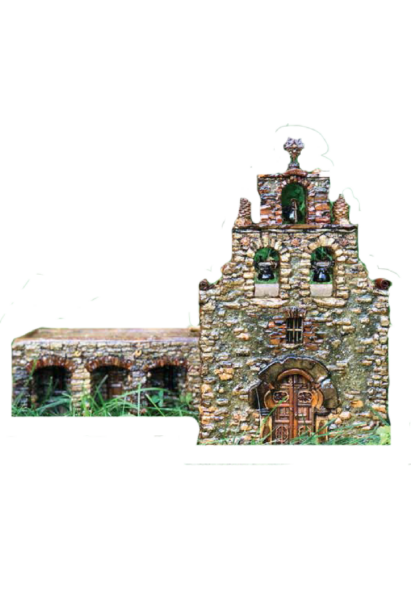
Tumacácori Church

Rio Rico, AZ

The church foundations were laid in the early 1800s under the direction of Franciscan missionaries.

North Bennington Train Station

North Bennington, Vermont

The North Bennington Depot is a historic railroad station at Depot Street and Buckley Road in North Bennington, Vermont. Built in 1880 as a passenger station, this Second Empire brick building is a surviving reminder of North Bennington’s former importance as a major railroad hub in southwestern
Vermont.

Mission San Francisco De La Espada Chapel

San Antonio, TX

Founded in 1690 as San Francisco de los Tejas near present-day Weches, Texas. In 1731, the mission was transferred to the San Antonio River area and renamed Mission San Francisco de la Espada.
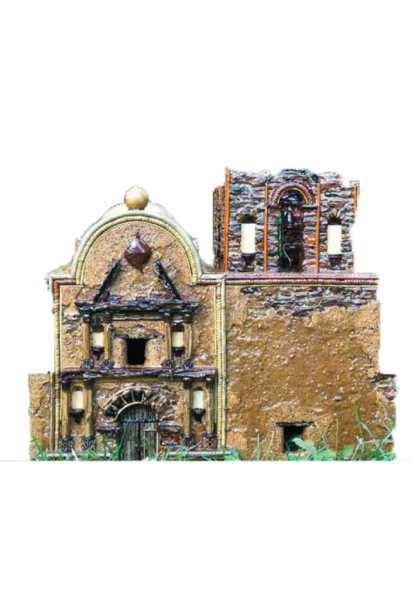
Michigan Central Station

Detroit, Michigan

Michigan Central Station (also known as Michigan Central Depot or MCS) was built for the Michigan Central Railroad. It replaced the original depot in downtown Detroit, which was shuttered after a major fire on December 26, 1913, forcing the still unfinished station into early service.

Formally dedicated on January 4, 1914, the station remained open for business until the cessation of Amtrak service on January 6, 1988. Comprising a train depot and an office tower with thirteen stories, two mezzanine levels, and a roof height of 230 feet (70m). The Beaux-Arts style architecture was designed by architects who had previously worked together on Grand Central Terminal in New York. It was the tallest rail station in the world at the time of its construction.

La Grande Station

Los Angeles, California

La Grande Station was the Atchison, Topeka, and Santa Fe Railway’s (Santa Fe) main passenger terminal in Los Angeles, California, from 1893 until the opening of Union Station in 1939. The station was located at 2nd Street and Santa Fe Avenue on the west bank of the Los Angeles River, just south of the First Street viaduct built in 1929.


Santa Fe opened La Grande Station on July 29, 1893. The station was unique for Southern California with its Moorish-inspired architecture Los Angeles Railway Yellow Cars called at the street adjacent to the station by 1920, and was at different times served by the N, 7, and 9 lines.

North Bennington Train Station

North Bennington, Vermont

The North Bennington Depot is a historic railroad station at Depot Street and Buckley Road in North Bennington, Vermont. Built in 1880 as a passenger station, this Second Empire brick building is a surviving reminder of North Bennington’s former importance as a major railroad hub in southwestern Vermont.

RR Crossing Sign

First developed in concept by the Stanford Research Institute in the late 1950s at the request of the Southern Pacific Company (the Southern Pacific Railroad, now merged into the Union Pacific Railroad), and patented in 1966.

The design goal of the level crossing predictor was to provide a consistent
warning time for trains approaching a level crossing.

RR Water Stop

A water stop or water station on a railroad is a place where steam trains stop to replenish water. The stopping of the train itself is also referred to as a “water stop”.

The term originates from the times of steam engines, when large amounts of water were essential. Also known as wood and water stops or coal and water stops, since it was reasonable to replenish engines with fuel as well when adding water to the tender.

Southern Railway Passenger Depot at Biltmore Village

Asheville, North Carolina

Southern Railway Passenger Depot was designed by architect Richard Morris Hunt and built in 1896 for the Southern Railway. It is a one-story symmetrical structure with a low hipped roof, central porte cochere,
wide overhanging eaves, half-timbering, and a pebbledash finish.


The station replaced a smaller building that preceded Cornelius Vanderbilt’s purchase of land to comprise the Biltmore Estate. The Southern Railway Depot on Depot St. in Asheville was closed in 1968 due to costs and was demolished in early 1969. After this, the Biltmore station served as Asheville’s station until passenger train service was discontinued in early August of 1975. The station now houses a restaurant.

Lāhainā Station

Lāhainā, Hawaii

The line follows a 6-mile stretch of historic right-of-way originally constructed to haul sugarcane from the sugarcane plantation fields in Kāʻanapali to the Pioneer Mill in Lahaina. At one time, the island had over 200 miles of rails connecting the sugarcane plantations to the mills. Trucks, however, largely replaced the railroads by the mid-20th century. In 1969, A.W. “Mac” McKelvey and the Makai Corporation created the railroad in order to illustrate this part of Hawaii’s past.